September and october 2026 · Kuala Lumpur · Vol. I

Industry · Power · Geoeconomics

03 / Speaking

Briefings, panels & public conversations

Selected talks on industrial resilience, critical supply chains and the political economy of the Indo-Pacific.

CONFERENCES & PANELS · 2026—PRESENT

FEATURED ENGAGEMENT · AUGUST 2026

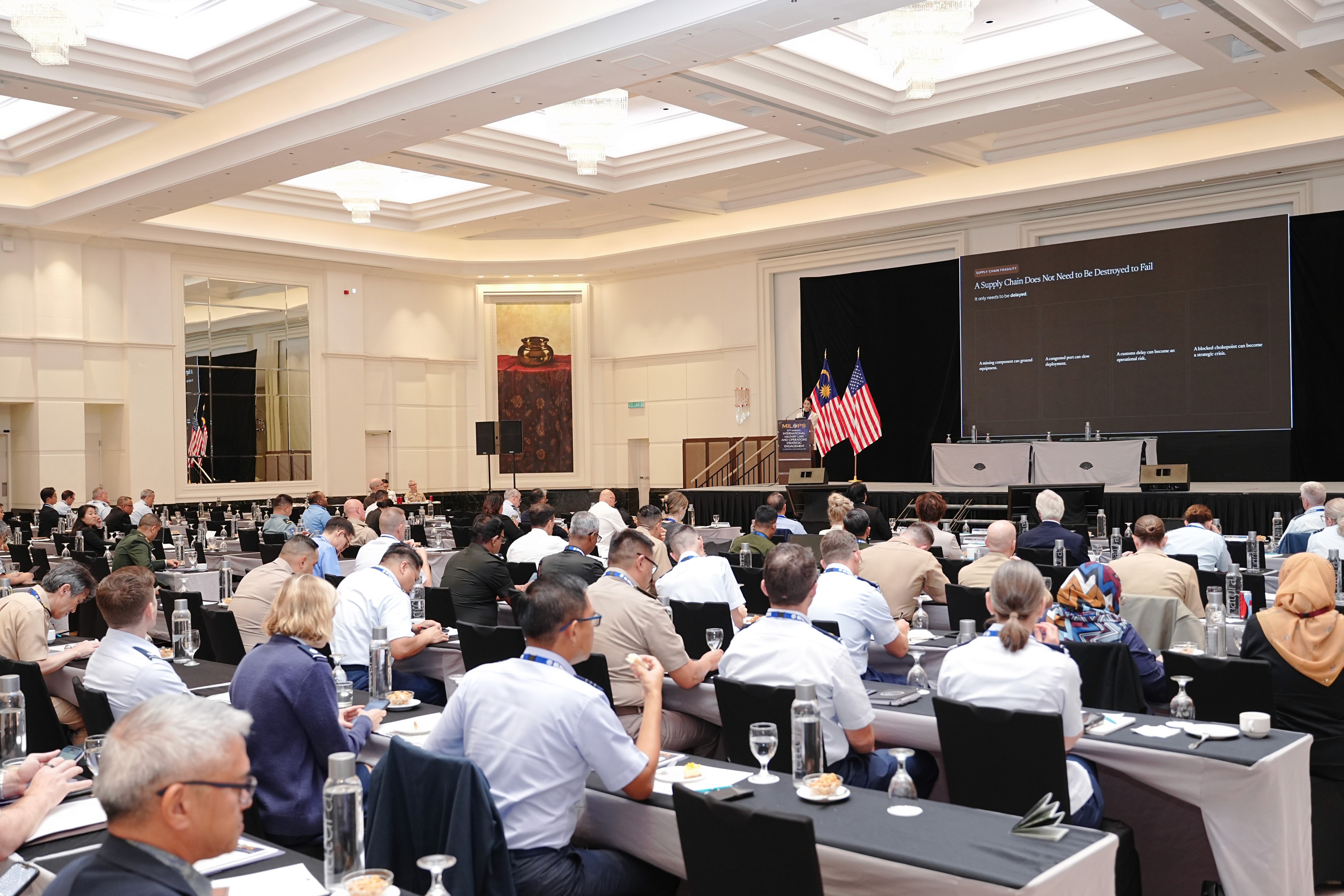
KUALA LUMPUR · 3–6 AUGUST 2026

Panel: Supply Chain Resilience and Cross-Border Strategies

The Engagement

At the 37th Annual International Military Law and Operations Strategic Engagement (MILOPS), Apoorba Banerjee presented on supply-chain resilience and cross-border strategy. Her remarks examined why supply chains designed primarily for efficiency, single-sourcing and minimal inventory are increasingly vulnerable to geopolitical disruption, conflict and climate stress—and how resilience must instead be deliberately engineered into the operating model.

"Cross-border resilience must be planned before disruption begins. Resilience should resemble an operating system, not a warehouse."

— Apoorba Banerjee, MILOPS 2026

ON SUPPLY-CHAIN RESILIENCE

Resilience begins before a crisis. Supply chains optimised solely for cost and speed become brittle when exposed to geopolitical disruption, conflict, climate stress or export restrictions. The answer is not indiscriminate stockpiling, but deliberate system design: diversified suppliers, visibility beyond tier one, strategic buffers and pre-agreed cross-border operating pathways. The objective is to move from efficiency alone to readiness—the capacity to keep critical goods moving when normal commercial assumptions fail.

Resilience begins before a crisis. Supply chains optimised solely for cost and speed become brittle when exposed to geopolitical disruption, conflict, climate stress or export restrictions. The answer is not indiscriminate stockpiling, but deliberate system design: diversified suppliers, visibility beyond tier one, strategic buffers and pre-agreed cross-border operating pathways. The objective is to move from efficiency alone to readiness—the capacity to keep critical goods moving when normal commercial assumptions fail.